
HVAC Air Filters: A Crash Course
Neglecting to change your HVAC air filter can be like letting dust and detritus pile up at the busiest intersection in Boston; eventually, nothing can get through! If your home feels more like a stuffy, smog-filled city, stepping up your filter game is critical.
Here’s the hack from the pros at Definition Heating, Cooling & Plumbing for better indoor air quality: replace your filters every 90 days. But if you have pets and allergies, consider changing them more often.
Understanding HVAC Air Filters
Picture this: a silent champion inside your home, tirelessly defending your airspace from invisible intruders. That’s your HVAC air filter, an everyday hero ensuring the air you breathe stays pristine.
But why focus on something as mundane as an air filter? Enter the MERV or Minimum Efficiency Reporting Value. This cool scale from 1 to 20 isn’t just numbers; it represents how effectively your filter can trap everything from pollen to pet dander.
Here’s the hitch: a high MERV rating can clean your air but may also choke your HVAC system’s airflow. It’s like putting a high-speed runner in too-tight shoes; yes, they’ll still run, but not without strain and the risk of damage over time.
What Dictates How Often You Should Change Your HVAC Filters?
The lifespan of your HVAC filters isn’t just about time on the calendar—many factors influence it. Top-performing filters catch more airborne particles but also clog faster, demanding more frequent changes. Live in a high-pollution zone or share your space with furry friends? You might find yourself replacing filters more often due to increased dust, pollen, or pet dander.
And it’s not just about where you live or who lives with you. High-traffic areas like commercial spaces see more dirt and dust, accelerating the need for fresh filters. Plus, if household members have allergies or respiratory conditions, clean filters become a priority to maintain a healthy indoor environment.
Choosing Your Home’s Air Filter Champion
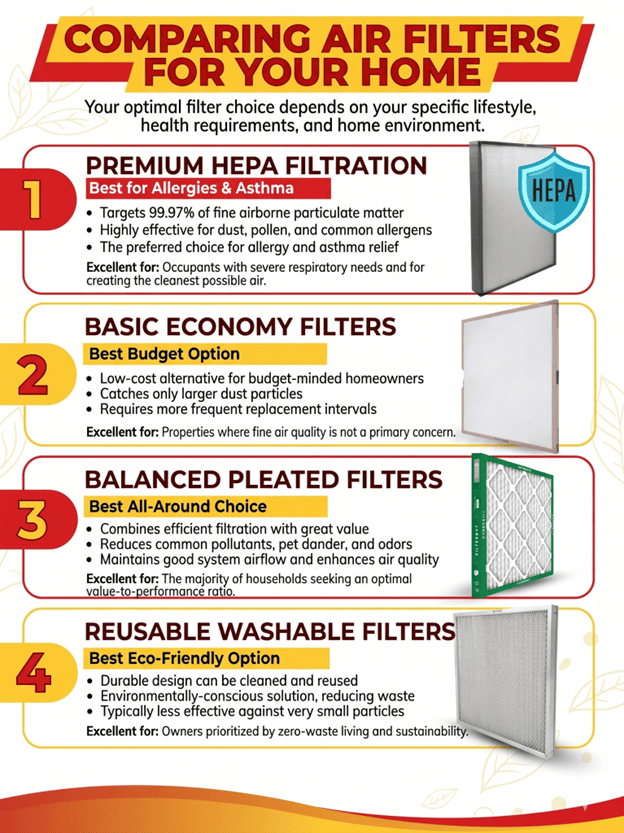
Finding the perfect air filter for your home is more akin to matchmaking than mere shopping. It’s about discovering the ideal companion for your home’s unique environment:
HEPA Filters: The Allergy Battler
Is your living room a battlefield for allergies? Equip yourself with HEPA filters. Capturing an impressive 99.97% of minuscule particles like dust mites and pollen, these filters are the elite defenders for anyone with a sensitive respiratory system. They are ideal for homes where pristine air is a necessity, not a luxury.
Fiberglass Filters: The Economical Choice
Are you tight on budget? Fiberglass filters are wallet-friendly, but they need frequent replacements and won’t catch the tiniest particles. They’re a basic, straightforward choice best suited for homes without serious air quality issues.
Pleated Filters: The Balanced/Best Approach
Are they seeking a happy medium? Pleated filters provide robust filtration at a reasonable cost. They adeptly grab dust, pollen, and pet dander, making them a wise pick for most homes.
Washable Filters: The Eco-Warrior’s Pick
Are you driven by sustainability? Washable filters could revolutionize your approach. These allow you to minimize waste by washing and reusing the same unit. However, remember that they might not capture the smallest particles, but are stellar for the environmentally conscious.
HVAC Care With Definition Heating, Cooling & Plumbing
Every Massachusetts home is unique, as are its air quality demands. Whether combating relentless allergies or aiming to trim environmental impact while saving costs, the right filter transcends mere air purification; it harmonizes with your values and lifestyle, enhancing your breathing space both physically and economically.
Ensure your selection combats dust and integrates seamlessly into your daily life. If you are unsure which type of filter will work best for your HVAC system or home needs, contact Definition Heating, Cooling & Plumbing. We’re happy to help our customers improve their indoor air quality. Call us at 508-682-5000 or request service online.
Signs It’s Time to Swap Your Air Filter
Energy Bills on the Rise? Have you noticed your energy bills climbing unexpectedly? This might be a sign from your HVAC system begging for a filter change. A dirty filter can overexert your system, using more energy to keep you cozy or cool.
Is Your HVAC Slowing Down? When your heating or cooling system can’t keep pace and fails to hit the desired temperature, your air filter often waves a red flag. A clogged air filter can strangle your system’s efficiency, turning it into an energy hog rather than an energy saver.
Constant Dust Battles? If you’re dusting so often that the cleaning cloth feels like an extension of your hand, it’s probably time to check your air filter. When filters falter, dust goes straight back into your living spaces.
Allergies Flaring Up Indoors? More sniffles and sneezes at home could be your air filter’s way of telling you it needs help. A clogged filter can mean allergens are roaming through the air unchecked, so it might be time for a change.
Frequently Asked Questions
How often should I change my air filter?
The best replacement timing can vary based on your system’s usage. Regular maintenance prolongs the filter’s life and ensures your system operates at peak efficiency. Inspecting and cleaning your filter routinely can significantly improve air quality and prevent efficiency losses due to clogs.
Do air filters last 3 months?
A three month replacement cycle is common, especially in homes with pets or allergy sufferers. The presence of additional particles and allergens can reduce a filter’s effective lifespan. Keep in mind that they can also last longer in some homes as well.
How long does the average air filter last?
Air filters typically last between one to six months. Factors such as air quality and how frequently you use your HVAC system significantly determine a filter’s lifespan
Do expensive air filters last longer?
Generally, yes, they can provide superior filtration and durability, capturing a greater range of pollutants and lasting longer, which can justify their higher cost. Benefits include improved air quality and prolonged HVAC system life.
What happens if you delay changing an air filter?
Putting off filter replacement can lead to the ‘dirty filter fallout’, where restricted air flow decreases system efficiency. Accumulated dust and debris reduce the filter’s effectiveness, forcing your HVAC to work harder, potentially leading to system failures.
Does changing the air filter improve AC performance?
Absolutely. Keeping your air filter fresh is crucial for maintaining top-notch air quality and AC efficiency. Over time, a dirty filter that’s stuffed with particles can impede airflow and degrade your AC’s performance.
How long does a typical air filter last?
Durability varies by brand and type. Usage frequency, environmental conditions, and diligent maintenance influence their operational lifespan.
What are the risks of not changing your AC filter for a year?
Leaving a filter unchanged for a year can lead to increased energy consumption, higher utility bills, and poor indoor air quality, aggravating respiratory conditions. In severe cases, it might even cause your HVAC system to fail.
Is it safe to run an HVAC without a filter?
No, it’s not advisable. Running your HVAC without a filter allows dust, pet dander, and pollen to circulate freely in your home and accumulate in your system, reducing its efficiency and potentially causing long-term damage.
Is it better to use a dirty air filter or no filter at all?
While neither is ideal, a dirty filter is preferable to none. Even a clogged filter can trap some particles, preventing them from circulating in your home. However, a clean filter is always the best choice for optimal air quality and system performance.